Where Heritage and Nature Meet
About Camps Bay Retreat
Tucked between the dramatic mountain ranges of Lion’s Head, Table Mountain and the Twelve Apostles, Camps Bay Retreat occupies one of Cape Town’s most enviable settings - a four-acre private estate overlooking the Atlantic Ocean. With a history spanning more than a century, this heritage hotel in Camps Bay embodies the layered story of its land and the people who shaped it.
Early Roots
The story of Camps Bay begins with Fredrik Ernst von Kamptz, a German seaman who settled at the Cape in the late 18th century. After marrying the widow of Johan Jan Lodewyk Wernich, owner of the nearby Ravensteyn farm, von Kamptz’s land became known as Die Baai van von Kamptz - later anglicised to Camps Bay. By the early 1900s the rugged coastline had become one of Cape Town’s most fashionable seaside escapes, linked to the city by a new road and tramline.
Earl’s Dyke Manor
In 1911, Thomas Earl Skaife purchased a large portion of this coveted coastline from the Cape Marine Suburbs. Nine years later, in 1920, he sold it to Friedrich Wilhelm Knacke, who named the estate Earl’s Dyke and began creating what the Cape Argus would later describe as “a house to be envied”.
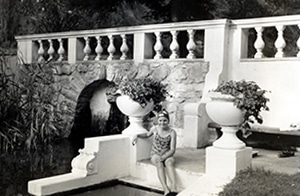
Knacke demolished the original dwelling and, in 1929, completed the manor that still stands today - an elegant residence designed by architect William Hood Grant. Perched on a mountain spur between two ravines, Earl’s Dyke Manor was celebrated for the way it blended architecture and landscape: stone paths meandering through indigenous gardens, streams flowing toward a shaded waterfall and a natural open-air swimming pool carved into the ravine - now known as the Mountain Pool.
The Knacke Family Years
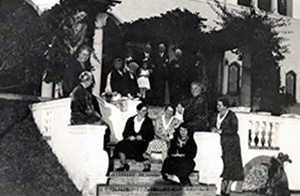
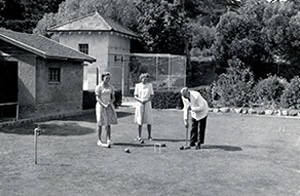
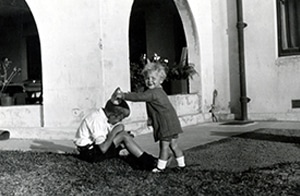
Knacke’s daughter, Trude Knacke, inherited the estate in 1945. Her recollections of childhood days spent exploring the ravine and swimming in the mountain pool bring warmth to the property’s grandeur. In 1985, she added a brick pool-house on the terrace, today home to the Mint Wellness Spa, extending her family’s tradition of refinement and care for the natural environment.
A New Custodianship
In 2002, the Brink-family took ownership of Earl’s Dyke Manor. Their vision reached beyond hospitality: to restore and preserve the property as a private nature retreat in Cape Town, a sanctuary of forest, fynbos and sea air.
The neighbouring property at 3 Chilworth Road was acquired in 2003 and transformed into Deck House, a contemporary counterpart to the historic manor. Two years later The Villa was added and a suspension bridge was built across the ravine, linking the houses through forest canopy and uniting them within one landscape that celebrates both heritage and renewal.
Growth and Rewilding
Over the years that followed, the custodians continued to nurture and expand the estate. Additional villas - Villa 5, Villa 7 and Villa 9 - were developed, each designed to harmonise with the surrounding wilderness. The gardens evolved into a mosaic of indigenous flora supported by an on-site nursery and re-established forest.
Recent additions such as the Forest Spa Pods re-imagine the estate’s founding vision of serenity in nature, offering guests a contemporary way to experience the same sense of refuge that has defined this historic estate in Cape Town for nearly a century.
A Living Heritage
Today, Camps Bay Retreat stands as both heritage landmark and luxury nature retreat, where historic architecture meets untamed landscape. The Earl’s Dyke Library, housed within the original manor, remains the intellectual heart of the property - filled with volumes on South African history, nature and travel, inviting guests to engage deeply with the world that surrounds them.
Across its four acres of mountain forest and gardens, Camps Bay Retreat continues to embody the harmony between design and wilderness envisioned by its early custodians: a place where mountain meets ocean and where time slows just enough to remind visitors that beauty, when carefully tended, becomes legacy.